Being involved in a car accident in Cleveland can be overwhelming and stressful. You may be facing injuries, vehicle damage, and questions about liability. At Gioffre Schroeder & Jansky Co., L.P.A., we guide you through every step after an accident so you can focus on recovery while protecting your rights. Acting promptly after a crash helps preserve evidence, document injuries, and handle communications with insurance companies correctly.
Consulting a car accident lawyer near you allows you to take practical steps to protect your claim and understand your legal options. Our team serves clients across Cleveland and surrounding Ohio counties, providing experienced guidance in automobile accident cases. By working with the best car accident attorney in Cleveland, Ohio, you can feel confident that your case is handled professionally, from reviewing accident details to negotiating with insurers and representing you in court if needed.
Why Post-Accident Actions Matter in Cleveland
Immediate actions after a car accident affect both recovery and claims. You may feel shaken or unsure, but staying focused on what to do next helps protect your rights and documents your situation accurately. Collecting evidence, recording details, and following proper reporting procedures can make a difference in how your case progresses. Consulting a car accident attorney in Cleveland, Ohio, allows you to know which steps matter most and avoid mistakes that could weaken your claim.
Ohio Laws That Affect Accident Claims
Ohio is a fault-based state for auto insurance. In most cases, the driver found responsible for causing the accident is required to cover damages through their insurance. Determining fault may involve reviewing traffic violations, driver conduct, and state regulations.
Even minor mistakes at the scene can affect how liability is assigned. You may not realize that leaving early, giving incomplete statements, or failing to document injuries can complicate the process under Ohio law.
How Early Mistakes Reduce Claim Value
Errors made at the scene can limit compensation. For example, if you leave the accident site before a police report is filed or do not document vehicle damage properly, insurance companies may question your account.
Similarly, sharing information about injuries before medical evaluation can affect settlement discussions. Taking careful steps, like staying on-site, gathering witness information, and keeping detailed notes, strengthens your position.
At Gioffre Schroeder & Jansky, we work closely with clients to review these actions and guide you through each step. Our team helps protect your interests and makes sure nothing is overlooked in the immediate aftermath of an accident.
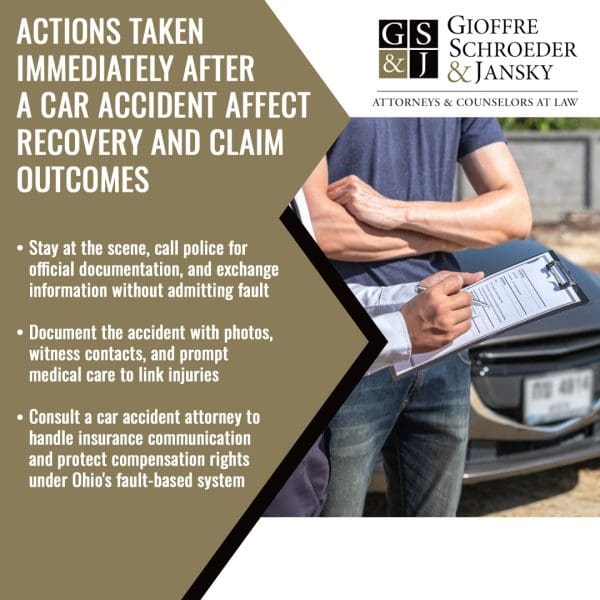
Step 1: Stay at the Scene and Check for Injuries
Remaining at the accident site is required under Ohio law. Staying protects your legal standing and helps everyone involved get the medical attention they need.
Legal Duties Under Ohio Law
Ohio law requires that all parties involved in a crash stay until law enforcement arrives and completes a report. Leaving the scene can lead to serious consequences, including fines, criminal charges, or a suspension of your driver’s license. Police officers document vehicle positions, traffic violations, and statements from everyone present, which can later affect liability and insurance claims. By staying at the scene, you help create an accurate record of the accident.
Medical Risks of Leaving Early
You might feel fine immediately after a collision, but conditions like whiplash, concussions, or internal bleeding can appear hours or even days later. Seeking medical attention promptly allows healthcare providers to identify and treat injuries before they worsen. Medical documentation from an early examination also supports any legal or insurance claims that may follow.
Step 2: Call Law Enforcement
Contacting the police creates an official record. Law enforcement reports provide a foundation for insurance evaluations and legal action. By calling the police, you document the details of the accident with an unbiased party. This record becomes a central piece of evidence if liability is disputed or if any injuries emerge later.
Why Police Reports Shape Fault Decisions
Police reports establish liability and document the scene. These reports serve as a reference for insurance companies and attorneys. Officers will record any traffic violations, physical evidence at the scene, and the positions of vehicles. This helps create a timeline of the accident and provides clarity about how the crash occurred. You will be able to refer back to the official report if disagreements arise about fault or damages.
Information Officers Record at the Scene
Reports include:
- Statements from drivers and passengers
- Vehicle damage and positions
- Traffic signals and road conditions
- Environmental and weather conditions
Step 3: Exchange Information Carefully
Provide only the necessary information to the other driver. Avoid discussing fault or speculating on the cause of the crash. You are not required to explain what happened or offer opinions about who may have been responsible. Keep your focus on gathering the details you will need for reporting and for any future legal support.
What Information to Collect
Collect:
- Names and contact details
- Driver’s license and insurance information
- Vehicle make, model, and license plate
- Time and location of the accident
Having these details recorded correctly will help both your insurance claim and any legal steps that may follow.
What Not to Say at the Scene
Do not admit fault or assign blame. Even casual statements suggesting responsibility can be used against you later. Avoid apologizing or speculating about the accident’s cause. Stick to facts, and let insurance companies and legal professionals determine liability based on evidence.
Step 4: Document the Accident
Evidence collected at the scene strengthens claims. Photos, videos, and notes provide proof of vehicle damage, road conditions, and contributing factors. Collecting this information carefully makes it easier to explain the events later to insurance companies or a judge.
Photos and Videos That Support Claims
Capture images of:
- Damage from multiple angles
- Skid marks or debris
- Traffic signals and road layout
- Weather and lighting conditions
These visuals give a clear record of the accident scene and vehicle impact. They also show the environment and hazards that may have contributed to the collision. You want these photos to reflect the situation accurately, so take your time to cover each area thoroughly.
Witness Statements and Contact Details
Record names and phone numbers of witnesses. Independent accounts support your version of events in both settlement negotiations and court. If someone saw the accident, their observations can confirm details you may not remember or that might be questioned later. Take brief notes on what each witness saw, including positions, movements, or unusual conditions at the time of the crash.
Step 5: Seek Medical Care Promptly
Medical evaluation protects both health and legal claims. Even if you feel fine immediately after a crash, some injuries can develop over hours or days. Going to a doctor promptly allows you to identify hidden injuries and receive treatment before they worsen. This also provides documentation that connects your injuries to the accident, which can be critical if you file a claim later.
Hidden Injuries After Car Accidents
Common delayed injuries include:
- Whiplash
- Concussions
- Soft tissue and back injuries
Medical Records and Injury Timelines
Document all examinations and treatments. Every visit, test, or procedure creates a record that shows how the accident affected you. Clear medical records provide proof for insurance companies or courts, showing that your injuries are linked to the crash and detailing the treatment you received.
Step 6: Notify Your Insurance Company
Report the accident quickly to comply with policy requirements. Contacting your insurer promptly allows your claim to be documented while the details are fresh. Most insurance companies ask that accidents be reported within a few days. If you delay, your claim may face unnecessary complications, reduced coverage, or even denial. By notifying your provider quickly, you give your claim the attention it requires from the start.
Required Reporting Timelines
Most policies require notification within days. Different policies have specific time limits, and missing them can affect the benefits you receive. Check your policy or speak with a professional to confirm the timeline. Reporting promptly helps your insurer gather the information they need while the accident details are still accurate.
Risks of Recorded Statements
Avoid detailed recorded statements without legal guidance. Insurance adjusters may ask for a recorded account of the incident, but providing one without support can work against you. They may interpret your words in ways that reduce the settlement or limit coverage. Speaking with a best car accident lawyer before giving any formal statement helps you communicate facts clearly without creating unnecessary risk.
Step 7: Avoid Public Discussions
Limit public statements about the accident. Social media posts, text messages, or casual conversations can be used by insurance companies or other parties to question your account of the accident. Even small comments about how the accident happened or about your injuries may be interpreted in ways you did not intend, and they can affect how liability or compensation is assessed.
Social Media and Claim Damage
Do not post about injuries or damages online. Photos of your vehicle, posts about your injuries, or updates about recovery can be taken out of context. Insurers may see these as evidence that conflicts with medical records or police reports, which can reduce your claim or complicate negotiations.
Conversations Insurers May Use
Be cautious when discussing the accident. Even in person or over the phone, statements to insurance adjusters, other drivers, or bystanders can be used to challenge your version of events. Focus your discussions on the facts, and avoid speculating about fault or giving opinions about the other party involved.
Step 8: Contact a Cleveland Car Accident Lawyer
Attorneys manage the complex parts of your claim, such as reviewing evidence and identifying factors that affect liability. They gather and organize documents, photos, and witness statements, making sure nothing important is overlooked.
How Legal Guidance Protects Claims
Lawyers assist with:
- Reviewing accident evidence
- Communicating with insurance companies
- Calculating damages
- Determining liability
What Happens During a Consultation
During a consultation, you and the lawyer review the accident, medical records, and insurance information. The discussion identifies the steps you need to take next and explains possible outcomes clearly. By choosing the best car accident attorney in Cleveland, you gain a professional ally who can manage your case efficiently and advocate for your rights.
Contacting a lawyer at Gioffre Schroeder & Jansky provides support throughout the claims process, reduces the risk of errors, and helps you focus on recovery while your case is handled by experienced professionals.
How Gioffre Schroeder & Jansky Co., L.P.A. Helps After Accidents
Our firm combines Ohio experience with trial expertise. We focus on guiding you through the legal process, reviewing all evidence, negotiating with insurance companies, and representing you in court if the case moves forward. You do not have to face insurance adjusters or opposing counsel alone. Our team works with you to gather the right documents, statements, and medical records that support your case. We handle the details so you can concentrate on recovery. Over time, our clients have recognized us as the best car accident lawyer firm based on our results and the referrals they provide.
Trial Experience and Ohio Focus
Our attorneys practice across Ohio. By handling cases in Cuyahoga, Lorain, Erie, Summit, Portage, and Lake counties, we have in-depth knowledge of local courts, judges, and procedures. This experience helps us respond quickly to challenges and present a clear strategy tailored to your situation. Being familiar with the local legal environment allows us to manage deadlines, file motions, and prepare for hearings in a way that gives your case the strongest support.
Long-term Client Commitment
We aim to be attorneys for life. Many clients return to us for other legal matters or refer their friends and family because they trust our approach and dedication. Our focus is on building relationships, not just handling a single case. By working closely with you, we maintain communication at every stage, making sure you know your options and what steps are being taken on your behalf.
Frequently Asked Questions
After a car accident, you likely have many questions about your rights and the next steps. The following answers address common concerns and guide you through what to do after a crash in Cleveland.
- When should a lawyer be contacted?
Contact an attorney as soon as possible. The sooner you reach out to a lawyer, the faster you can preserve evidence and protect your legal position. A car accident lawyer near you can review the details of your accident, gather witness statements, and handle communication with insurance companies, reducing the stress of managing your case alone.
- What if the fault is disputed?
Ohio allows shared fault claims. If the other driver disputes liability, the law recognizes that multiple parties may share responsibility. Compensation is calculated based on the percentage of fault assigned to each driver. This means even if you are partially responsible, you can still recover damages proportional to the other driver’s share of fault.
- How long do Ohio accident claims take?
Case timelines vary. The duration of a claim depends on factors such as the severity of injuries, the amount of property damage, the complexity of the accident, and the responsiveness of the insurance companies involved. Some cases may resolve in a few months, while others, especially those involving serious injuries or disputed liability, may take longer.
- Is a consultation required?
A consultation helps explain rights and options. Speaking with a lawyer does not obligate you to hire them, but it gives you the chance to review your case with an expert. A car accident lawyer consultation clarifies how your case may proceed, the types of compensation you may be eligible for, and strategies for protecting your interests.
Take the Next Step: Contact Gioffre Schroeder & Jansky Today
If you’ve been involved in a car accident in Cleveland, contacting the right legal team can make a meaningful difference. At Gioffre Schroeder & Jansky Co., L.P.A., we provide hands-on support from the moment you reach out, guiding you through the legal process and protecting your rights.
Our attorneys review your accident details, help gather evidence, and advise on the best course of action for your case. Scheduling a car accident lawyer consultation with our team gives you clear guidance, step-by-step assistance, and professional representation tailored to your situation. Call us today at (216) 771-1144 to speak with an experienced attorney. You can also visit our Contact Page to schedule your consultation at a time convenient for you.

David Jansky is a Partner and Attorney at Law at Gioffre Schroeder & Jansky Co., L.P.A where he brings over 17 years of legal experience to individuals and families across Northeast Ohio. A graduate of the University of Akron School of Law, David focuses his practice on family law including divorce, dissolution, child custody, and support as well as criminal defense, probate matters, civil litigation, personal injury, bankruptcy, and employment law.


Have Any Questions?
If you need legal services throughout the Cleveland and Northeast Ohio area, contact the experienced attorneys at Gioffre & Schroeder. Our goal is to handle your case efficiently and in a manner that results in full compensation.
 CALL AN OHIO ATTORNEY