
Fall is the peak season for deer-related crashes in Ohio, and drivers across Cuyahoga County and the rest of Northeast Ohio see the risk climb sharply from October through the end of December. If you are asking whether insurance covers hitting a deer in Ohio, the honest answer is that it depends on which optional coverages you purchased and on exactly how the collision unfolded. Please note that this article is general educational information and is not legal advice, it is not a substitute for speaking with an attorney about your own situation, and reading it does not create an attorney-client relationship. Every claim turns on its own facts and policy language. Gioffre Schroeder & Jansky Co., L.P.A., a Cleveland firm serving clients across Ohio since 1986, lists insurance coverage disputes among its practice areas.
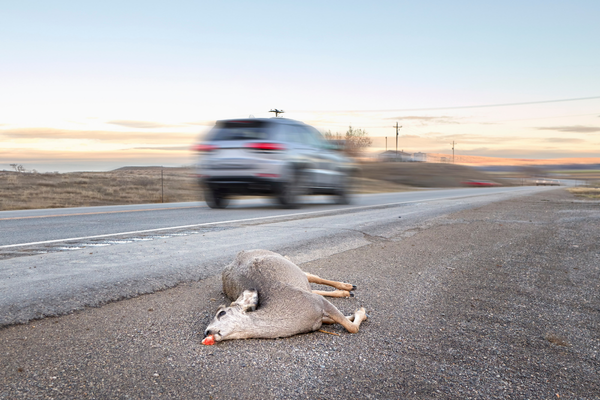 Why October changes the math
The seasonal spike is well documented. Ohio State Highway Patrol data shows more than 109,000 deer-involved crashes on Ohio roadways since 2019. From 2019 through 2023, 47% occurred in October, November and December, with 22% in November alone.
The Ohio Department of Natural Resources attributes the increase to the fall breeding season, when deer become far more visible and active and will dart into roadways with little caution. Dawn and dusk are the highest-risk hours: roughly 26% of deer-related crashes happen between 5:00 a.m. and 7:59 a.m. ODNR also notes that deer rarely travel alone, so a single animal crossing ahead of you often means others are close behind.
Statewide, 95% of deer-involved crashes since 2019 resulted in property damage only. That is reassuring, but it is not the whole picture: over the same period, 44 of those crashes were fatal, resulting in 45 deaths.
What comprehensive coverage does and does not do
Here is the distinction that determines most deer claim outcomes in Ohio, and it is the one drivers most often get wrong.
Comprehensive coverage pays for damage to your own vehicle from incidents that are not collisions with another car — theft, vandalism, fire, falling objects and animal strikes. If your vehicle makes physical contact with a deer, this is the coverage that responds, paying repair costs minus your deductible or, if the vehicle is a total loss, actual cash value minus the deductible.
Collision coverage pays for damage from striking another vehicle or a fixed object.
Liability coverage, which Ohio law requires, does not pay for damage to your own vehicle. It covers damage you cause to others.
The critical wrinkle is that neither comprehensive nor collision coverage is mandated by Ohio law. Both are optional. A driver carrying only the state-required minimum liability coverage generally has no coverage for a deer strike — no repair payment, no total loss payment, nothing. Lenders and leasing companies usually require both, which is why many drivers have them without realizing it, but plenty of Ohioans driving older paid-off vehicles have dropped comprehensive to save on premiums. Given that AAA East Central reported an average animal-vehicle claim cost of $5,620 in 2024 across its region, which includes Ohio, that trade-off deserves a second look before deer season.
The swerve scenario is a different claim entirely
This is where deer collisions stop being simple. Your vehicle has to make physical contact with the deer for comprehensive coverage to apply. If you swerve to avoid an animal and instead strike another car, a guardrail, a utility pole or a tree, that is a collision claim, not a comprehensive one.
The consequences go further than which box gets checked. If you swerve and hit another vehicle, you may be treated as at fault for the damage to that vehicle and for injuries to the people in it. Your liability coverage would respond, and the other driver’s claim would be against you. A single reflex to avoid an animal can turn a straightforward comprehensive claim into a contested fault dispute.
Multi-vehicle and fixed-object crashes also tend to produce injuries in a way that direct deer strikes often do not, so the fundamentals in this guide to documenting your Cuyahoga County car accident apply squarely to an animal-related collision.
Injuries are handled by a separate coverage
Comprehensive and collision coverage both pay for vehicle damage only. Neither one pays your medical bills.
If you or a passenger is hurt in a deer-related crash, medical expenses are typically addressed through medical payments coverage on your auto policy, if you carry it, working alongside your health insurance. Like comprehensive, this coverage is optional in Ohio. Drivers are often surprised that a policy covering thousands in bumper damage may contribute nothing toward an emergency room visit.
Where another driver was involved — a vehicle that forced you into a swerve, or a chain-reaction impact — the injury analysis becomes an ordinary fault-based Ohio claim, and other coverages, including uninsured and underinsured motorist coverage, may come into play.
 What to do at the scene
 What to do at the scene
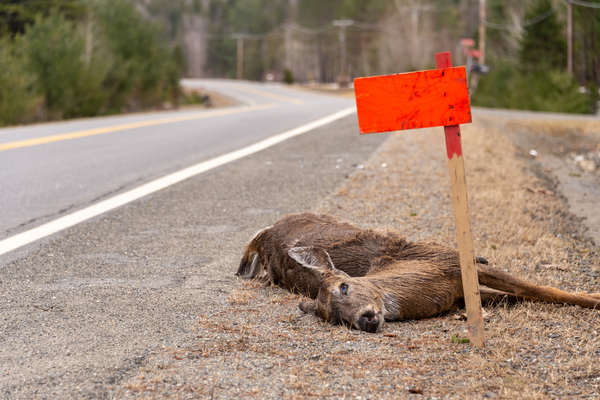
The Ohio State Highway Patrol advises that if you strike a deer and are able to do so, move yourself to a safe place, turn on your hazard lights, and report the crash. Motorists can reach the nearest Highway Patrol post by dialing #677 from a mobile phone.
Beyond that, a few habits tend to matter later:
- Keep your distance from the animal. An injured deer is unpredictable. Wait for authorities rather than approaching it.
- Photograph everything — damage from several angles, the roadway, skid marks, debris and lighting conditions. Note the date, time and exact location.
- File a police report, which creates a contemporaneous record if coverage or fault is later questioned.
- Preserve any video. Footage can settle disputes about speed and sequence that photographs cannot, and the reasons video carries weight are explained in this overview of the role of dashcams in Ohio car accident claims.
- Review your declarations page before reporting the claim, so you know which coverages you actually hold.
When the claim becomes a dispute
Most deer claims are paid without incident. Some are not. Disagreements commonly arise over the actual cash value assigned to a totaled vehicle, whether contact with the animal actually occurred, which coverage applies to a swerve, and the scope of repairs an insurer will authorize. This discussion of navigating auto insurance claims in Northeast Ohio covers the general landscape. Ohio also imposes deadlines on legal claims arising from a crash, which is one reason delay works against anyone who may need to pursue a dispute.
GSJ Law
If a deer collision has left you with a denied claim, a coverage question you cannot get answered, or injuries from a swerve or secondary impact, it costs nothing to have someone look at it. Gioffre Schroeder & Jansky Co., L.P.A. has served clients throughout Ohio since 1986 from its office in Cleveland’s Historic Warehouse District, and its areas of practice include insurance coverage disputes, automobile accidents and personal injury. The firm offers a free consultation. Call (216) 771-1144 or contact the firm to schedule one and get your questions answered before the winter driving season sets in.
Common FAQs
-
Does car insurance cover hitting a deer in Ohio?
It depends on your coverage. Comprehensive coverage responds when your vehicle makes physical contact with a deer, paying repair costs minus your deductible. Liability coverage, which Ohio law requires, does not pay for damage to your own vehicle. Comprehensive is optional in Ohio, so not every driver has it.
-
Is comprehensive coverage required in Ohio?
No. Ohio law requires liability coverage. Neither comprehensive nor collision coverage is mandated by any state law. Lenders and leasing companies typically require both, which is why many drivers carry them, but drivers with older paid-off vehicles sometimes drop comprehensive to lower their premium.
-
What happens if I swerve to avoid a deer and hit another car?
Your vehicle must make contact with the animal for comprehensive coverage to apply. If you swerve and strike another vehicle or a fixed object instead, that becomes a collision claim. You may also be considered at fault for damage to the other vehicle and for injuries to its occupants, in which case your liability coverage responds.
-
Will liability-only coverage pay for deer damage?
No. Liability coverage pays for damage you cause to other people and their property. It does not cover damage to your own vehicle from any cause, including an animal strike. A driver carrying only Ohio’s minimum required coverage generally has no coverage for a deer collision.
-
Does insurance pay my medical bills after a deer crash?
Comprehensive and collision coverage both pay for vehicle damage only. Medical expenses are typically addressed through medical payments coverage on your auto policy, if you carry it, working alongside your health insurance. Medical payments coverage is also optional in Ohio.
-
Do I have to pay a deductible on a deer claim?
Usually, yes. If repairs cost $2,000 and your comprehensive deductible is $500, you pay the $500 and your insurer covers the remaining $1,500. If the vehicle is declared a total loss, you receive its actual cash value minus the deductible. It depends on many factors.
-
Is hitting a deer considered an at-fault accident?
Insurers generally treat animal strikes as not-at-fault events, which is why they fall under comprehensive rather than collision coverage. Whether a claim affects your premium depends on your insurer, your policy and your claims history, so it is worth asking your carrier directly rather than assuming.
-
What should I do immediately after hitting a deer in Ohio?
The Ohio State Highway Patrol advises that if you are able, move to a safe place, turn on your hazard lights and report the crash. You can reach the nearest Highway Patrol post by dialing #677 from a mobile phone. Keep your distance from an injured deer, photograph the damage and scene, and note the date, time and location.
-
When are deer crashes worst in Ohio?
Ohio State Highway Patrol data shows that from 2019 through 2023, 47% of deer-involved crashes occurred in October, November and December, with 22% in November alone. Roughly 26% happen between 5:00 a.m. and 7:59 a.m. The Ohio Department of Natural Resources links the spike to the fall breeding season.
-
When should I speak with an attorney about a deer collision?
Consider it if your claim was denied, if you disagree with the value assigned to a totaled vehicle, if the insurer disputes which coverage applies to a swerve, or if anyone was injured in a secondary impact. Gioffre Schroeder & Jansky Co., L.P.A. lists insurance coverage disputes and automobile accidents among its practice areas and offers a free consultation at (216) 771-1144.

David Jansky is a Partner and Attorney at Law at Gioffre Schroeder & Jansky Co., L.P.A where he brings over 17 years of legal experience to individuals and families across Northeast Ohio. A graduate of the University of Akron School of Law, David focuses his practice on family law including divorce, dissolution, child custody, and support as well as criminal defense, probate matters, civil litigation, personal injury, bankruptcy, and employment law.


Have Any Questions?
If you need legal services throughout the Cleveland and Northeast Ohio area, contact the experienced attorneys at Gioffre & Schroeder. Our goal is to handle your case efficiently and in a manner that results in full compensation.
 CALL AN OHIO ATTORNEY